AI Moves from Buzzword to Boardroom: What’s Really Changing in Social Housing
New research and government announcements show that AI is moving rapidly from theory to practice in the UK’s social housing sector — but most organisations still aren’t ready.

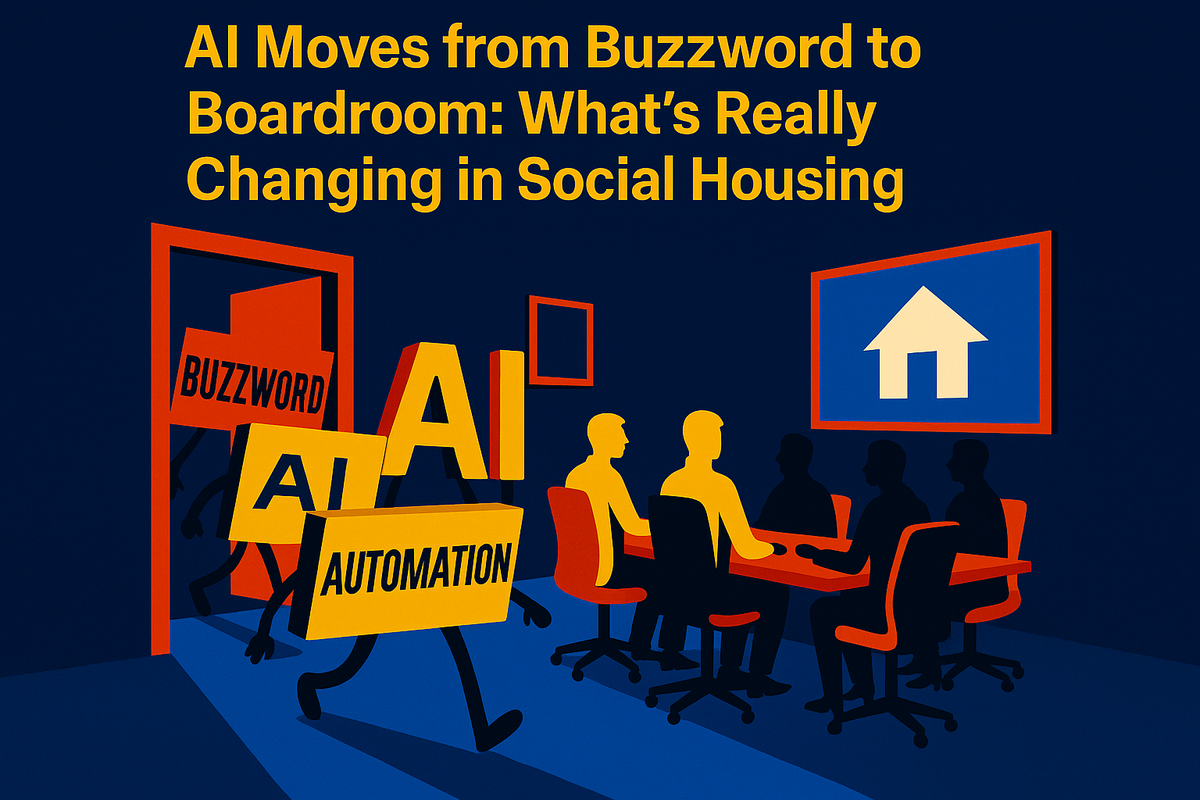
AI is no longer just a tech headline, it’s starting to reshape how the UK social housing sector thinks and operates.
Over recent months, a series of new reports, sector initiatives, and government announcements have signalled that artificial intelligence (AI) is moving from buzzword to boardroom conversation within housing associations and local authorities. Intent is strong, but the readiness gap remains wide.
Sector Initiatives: DASH Steers AI Understanding
The DASH (Demystifying AI for Social Housing) programme launched this year to help boards, executives, and sector leaders cut through the mystery surrounding AI. Led by social housing and technology experts, DASH provides hands-on resources and case studies tailored for housing leaders.
The goal is simple:
- Identify the right use-cases for AI
- Address responsible data practices
- Build capability and effective governance
- Avoid “tech for tech’s sake” - fix the basics first
DASH fills a crucial gap for organisations seeking a structured route into ethical and practical AI deployment.
Research Confirms: The Sector Isn’t Ready Yet
Fresh surveys by BCN Research and IT Brief reveal about 31% of social landlords use AI tools - but only a small minority have a coherent strategy or governance model. Notably, 22% of staff were unaware AI tools are even embedded in their organisation.
“Social housing is in the early stages of AI adoption—testing tools, but lacking infrastructure to scale responsibly.”
– BCN Research, 2025
Barriers remain well-known: poor data quality, siloed legacy systems, limited digital skills, and ongoing concerns around bias and compliance all hold back scaled progress.
Government: AI as Growth and Housing Enabler
In October 2025, the UK Government published its Blueprint for AI Regulation, highlighting how responsible use of AI can speed up planning approvals, accelerate housing delivery, and strengthen public trust.
One flagship trial is Extract, an AI-powered tool developed by DLUHC and launched at London Tech Week, which digitises decades-old planning documents, handwritten notes, and maps in seconds. By converting historic files into usable data, councils can unlock faster planning decisions and support new housing supply. Initial pilots have cut processing times from hours to under a minute per application, an unprecedented boost for regeneration.
Real-World Examples: Success Stories Drive Engagement
Together Housing built an AI model that identifies residents at risk of tenancy failure, leading to earlier, more compassionate interventions and 80%+ predictive accuracy.
Similarly, ForHousing’s Zippy chatbot automatically resolves 85% of tenant queries, saving 52 days of staff time each month.
Flagship Group’s digital transformation earned recognition for empowering staff and boosting operational performance.
Why It Matters for Housing Providers
AI’s impact goes far beyond planning, touching every facet of social housing:
| Area | Emerging AI Opportunity |
|---|---|
| Repairs & Maintenance | Predictive diagnostics (IoT) and image recognition |
| Asset Management | Automated data cleansing and asset analytics |
| Tenant Services | Chatbots and digital workflow assistants |
| Compliance & Safety | Damp/mould detection, smart document monitoring |
| Business Planning | Data-driven forecasting and performance simulations |
The challenge is organisational readiness - not technical feasibility.
Leadership: Bridging the Culture Gap
The National Housing Federation notes AI has already walked through the sector’s front door, yet leadership confidence varies.
Boards are right to flag ethics and data security risks; others are growing frustrated by slow progress. But standing still is the greater risk.
Those investing now in skills, governance, and data will lead in ethical, effective AI deployment.
Those delaying face pressure from tenants, regulators, and funders, not just market rivals.
The Bottom Line
AI won’t replace people, but it will replace outdated ways of working. The real question is: not “should we?” but “how do we do it safely, sensibly, and strategically?”
At SocialHousing.ai, we’re tracking these developments and sharing actionable insights for sector leaders. The goal: clearer choices, better outcomes for tenants, smarter operations for providers.
Practical Engagement
Have you run an AI pilot or digital project in your organisation?
Share your results with SocialHousing.ai for a chance to be featured in upcoming sector briefings and roundtable events.